
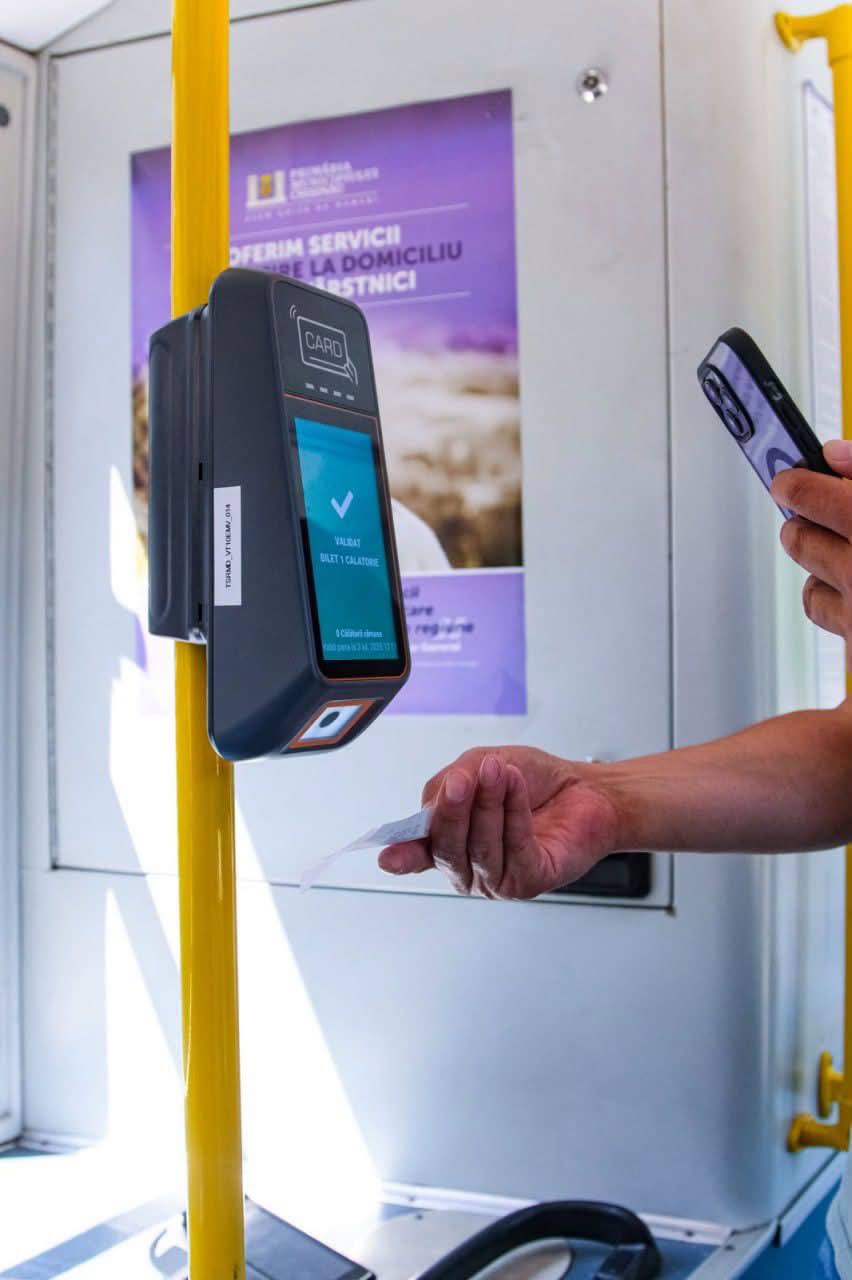
The concept for an integrated electronic fare collection system for municipal public transportation was approved on Tuesday, October 6, 2026, by the Chisinau City Council.
The document provides for the creation of a unified system for electronic payment and validation of trips on buses and trolleybuses. Payment can be made by holding a card or other payment method near the validator, according to the “tap-and-pay” principle. The system will allow the use of transit cards and, gradually, bank cards, mobile phones, and other digital devices.
At the same time, payment options will be maintained for people who do not use banking services or digital devices.
In the next phase, procurement documentation will be developed and the procurement process for the necessary services and equipment will be initiated. Once the supplier is selected, the equipment will be installed and the system will be implemented in the municipal transit network.
The concept was developed with the involvement of experts from Belgium, in accordance with the Chisinau Municipality’s Sustainable Urban Mobility Plan and based on the study on e-ticketing conducted as part of the project “MOVE IT like Lublin – a Chisinau public transport sustainable development initiative” (funded by the European Union and implemented from 2021 to 2024), as well as the results of pilot projects and consultations with transit operators.
The municipality is not starting from scratch in this process. In recent years, several payment solutions have been implemented and tested, including via SMS and bank card. The experience gained and the results of the pilot projects will be integrated into a single system applicable across the entire municipal public transit network.
The electronic fare collection system is set to be implemented in the public transit system managed by RTEC and PUA, which currently operate a fleet of over 650 vehicles.